
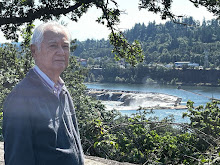

I have always believed that family history is never just about names, dates, or places, it is about understanding who we are and how we came to be. In reading and reflecting on the writings of Dr. David B. Katague, I find myself drawn not only to the details of his family’s past in Iloilo and Marinduque, but to the deeper realization that his story echoes something much larger: the story of the Philippines itself.
What strikes me most is how vividly he brings to life the world before World War II. Through his work, I can almost see the rhythms of provincial life, tight-knit communities, shared traditions, and a way of living that was grounded in both simplicity and quiet strength. These were not just historical snapshots; they were lived realities shaped by generations, influenced by colonial histories, and held together by enduring Filipino values.
Then comes the war, a turning point that feels both deeply personal and profoundly national. As I reflect on his accounts of the Japanese occupation and its aftermath, I am reminded that history is never abstract. It is experienced through families, through loss, through survival. What resonates with me is not just the hardship, but the resilience. There is a consistency in the Filipino spirit that persists even in disruption, a refusal to lose one’s sense of identity, even when everything else is uncertain.
As the narrative moves into the postwar years, I find another layer that feels familiar: migration and change. Like many Filipino families, the Katague story does not remain confined to one place. It expands, first within the Philippines, then beyond it. Yet what stands out to me is that this movement is not about leaving something behind. It is about carrying something forward. The values formed in Iloilo and Marinduque, respect, family cohesion, cultural memory do not disappear. They adapt, they travel, and they continue to shape identity even in new environments like the United States.
I am particularly drawn to his dedication to genealogy. In a time when it is easy to lose touch with our roots, his work feels almost like an act of preservation and even resistance. By documenting his family’s lineage with such care, he transforms history into something tangible and human. It reminds me that our identities are not isolated; they are built across generations, shaped by stories that deserve to be remembered and retold.
What I take away from Dr. Katague’s writing is a sense of continuity. Too often, we think of identity as something divided between past and present, between homeland and diaspora. But his work challenges that idea. It shows me that identity is not fragmented; it is layered. The past is not gone, it lives within us, informing how we see the world and how we understand ourselves.
In many ways, I see the Katague family story as a reflection of the Philippines, resilient, complex, and deeply rooted in history. And in engaging with that story, I am reminded of the importance of looking into our own histories, of asking where we come from, and of recognizing that those answers shape where we are going.
For me, this is what makes his writing so meaningful. It is not just about one family. It is an invitation for all of us to reconnect with our own narratives, to see our heritage not as something distant, but as something alive and present in our everyday lives".
By Derek. MJ -A Fellow Filipino-American, A Loyal Blog Reader since 2010, Daly City, California
My Photo of the Day: My Blooming Zinnias in My Patio Here at THD


No comments:
Post a Comment