David B. Katague is an online memoirist and cultural essayist whose writing has appeared on HubPages

Thursday, May 29, 2025

Another Filipino Politician Relative- Tomas Confesor

Go to Geni
Home of the World Family Tree
That's right!_ I have another famous Filipino Relative! On My Father Side of the Family. 
My first posting on this subject was Teofisto Guingona-another politician.
I remember my father mentioning his name when during the Japanese-American War in the Philippines. 
Geni's Relationship Finder just found a path between you and Tomás Confesor in the World Family Tree. It turns out that Tomás Confesor is your second cousin once removed's husband.
Feel free to share this. You can download the image below or grab the link to the relationship page and post it on social media.

Tomás Confesor (1891-1951) was a prominent Filipino politician and leader during a pivotal era in the Philippines' history. Born in Cabatuan, Iloilo, he pursued education at the University of the Philippines and later at the University of Chicago, which equipped him with a robust foundation in governance and public administration. Confesor's political career began in the Philippine Assembly, where he advocated for agrarian reforms and the welfare of farmers, reflecting his deep connection to his rural roots. During World War II, Confesor played a crucial role as the governor of Panay and Romblon, organizing resistance against Japanese occupation. His leadership in the guerrilla movement was instrumental in maintaining Filipino morale and resistance efforts. After the war, he served as a senator and was appointed Secretary of the Interior, where he focused on rebuilding the war-torn nation and promoting democratic governance. Confesor's legacy is marked by his dedication to public service and his unwavering commitment to Philippine independence and development. His efforts in both wartime and peacetime significantly shaped the political landscape of the Philippines.
For Details visit: 
May 2025 features a rare sequence of 11 palindrome dates, including 10 consecutive days from May 20-29, sparking excitement on social media. The pattern will repeat in June next year

Lastly, Did you Know That....
Oishi, the popular snack brand found all over China, Vietnam, India, and more — is 100% Filipino-owned! It was started by Liwayway Marketing Corporation in Manila in the 1970s.
Though many think it’s a foreign brand, Oishi is a Pinoy success story in global snack food. Its name, which means “delicious” in Japanese, helped it go international — but its roots are proudly Filipino.

Discovery of New Antibiotic Loricidin

From My Science Readings This Week: If you have been following my blogs you probably know that I retired from FDA from the Center of New Drugs and was involved with Development of Antibiotics and all other Anti-Infectives Drug Products. 


My Last Job was a Chemistry Team Leader and I had a GS-14 expertise on Anti-Iinfectives, Anti-Malarial. Antibiotics and other Anti-Infevtives Drug Products.  The story on the discovery of this new antibiotic is very fascinating to me.  It involves the three items for success, that is knowledge, persistence and a some luckDo you agree? 

 https://chateaudumer.blogspot.com/2023/08/excerpts-from-my-autobiography-updated.html


Here's a repost of a recent development and discovery of a new antibiotic- Lariocidin. It is a must read if you are a science enthusiast.  Its is an example of patience and a little bit of luck and of course knowledge  and expertise.  

   Digging in the dirt: Scientists discover a new antibiotic compound from an old source

 
March 31, 2025
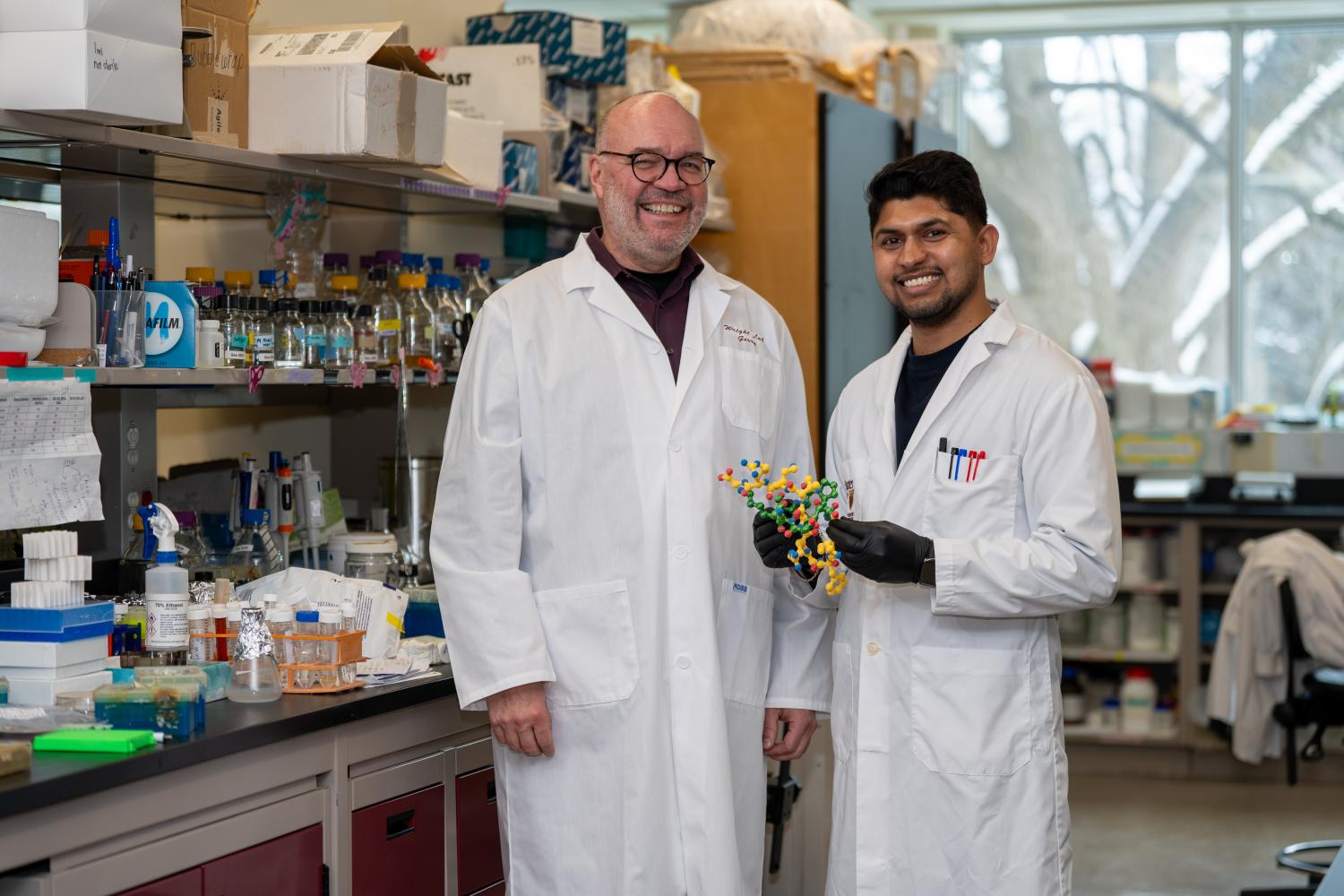
Gerry Wright and Manoj Jangra

Senior study author Gerry Wright, PhD, (left) and first author Manoj Jangra, PhD.
Photo courtesy of McMaster University

At a time when the news about the antibiotic pipeline hasn't been great, a team of Canadian and US scientists say they've made a discovery they hope could lead to an entirely new class of antibiotics.

The discovery is an antibiotic peptide that was identified in bacteria from soil that had been grown for a year in a lab at McMaster University in Ontario. After observing that a substance produced by a bacterium from one of the soil samples showed antibacterial activity against multidrug-resistant bacterial species, researchers from McMaster and the University of Illinois at Chicago (UIC) were able to identify the peptide, which they named lariocidin, as the molecule responsible for the activity.

Even better, they discovered that lariocidin—named for its knotted, lasso-like chemical structure—has a unique mechanism of action that differentiates it from other antibiotics. They also found that it's active against a wide spectrum of bacteria, isn't toxic to human cells, and works in an animal model of infection.

The findings were published last week in Nature.

Although it's just the beginning of a long road, Gerry Wright, PhD, who directs the Michael G. DeGroote Institute for Infectious Disease Research at McMaster, says he's "pretty chuffed" about what they've found.

"This is exactly where you want to be at the beginning of this journey," Wright said. "Now to see whether or not we can turn it into a drug."

'It's hard to find something new'

The discovery emerged from work that Wright and members of his lab have been pursuing for several years—looking for naturally occurring antibiotic resistance in microbes found in the environment. Over the years they've collected as many as 13,000 microbes, hoping that some, in addition to producing resistance genes, might also harbor some antimicrobial compounds.

As Wright explains, the environment has been the source of some of our most commonly used antibiotics, from the original antibiotic, penicillin—which was discovered in mold growing in a petri dish in 1928—to daptomycin, identified in a soil sample from Turkey in the late 1980s. But by the 1980s, most pharmaceutical companies were pivoting away from environmental sources of antibiotics, because they had already found the low-hanging fruit, and new discoveries were becoming more difficult.

"They kept finding penicillin or streptomycin or tetracycline over and over again," Wright said. "It's easy to find those molecules. It's hard to find something new."

Hoping to find some "new stuff from the old stuff," Wright and his colleagues spent a year growing microbes from soil collected from the backyard of one of the team members. While several of the fast-growing microbes died off, they found that an extract from a slower-growing, often overlooked bacterium called Paenibacillus showed potent antibacterial activity against Escherichia coli and a multidrug-resistant strain of Acinetobacter baumannii. 

It's easy to find those molecules. It's hard to find something new.

Initially, they thought the activity could be explained by the fact that Paenibacillus naturally produces an older antibiotic called colistin. But using reverse-phased chromatography, they were able to separate out the compounds from the Paenibacillus extract—what Wright calls "goo"—and identify the lasso peptide lariocidin as a molecule with its own antibacterial activity.

"If we had just done traditional testing, we would have missed this new molecule because the overwhelming product of the 'goo' is this old drug called colistin," he said.

A new target

The next step was to examine how lariocidin works. With the help of experts in ribosome chemistry at UIC, they found that the peptide inhibits bacterial growth by binding to the bacterial ribosome, which is responsible for protein synthesis. That wasn't necessarily surprising, since the ribosome is a key target for many classes of antibiotic.

But what was surprising is the discovery that lariocidin binds at a different site on the ribosome than other antibiotics, so it's not susceptible to the same resistance mechanisms that bacteria use to fight off those other drugs.

"Finding new spots that other antibiotics haven't already selected for their binding is increasingly harder to do," Wright said. "So that was fantastic."

"In the antibiotic discovery field, you want a weapon which kills by targeting something different than the previous ones did before," study co-author Yury Polikanov, PhD, an associate professor of biological sciences at UIC, explained in a university press release. "Otherwise, previously used protections will automatically lead to defense against the new molecule."  

Further testing revealed lariocidin showed no toxicity to human cells, readily inhibited growth of both gram-positive and gram-negative bacteria inlab tests, and demonstrated potent activity in mice infected with A baumannii.

They also discovered a double-knotted variant of the peptide—lariocidin B— that might have even better drug-like properties.

A long road ahead

Wright is under no illusion that the road ahead will be easy. What the team is working on now is the process of taking lariocidin from a natural product to a clinical product. They're deconstructing the peptide and rebuilding it with additional elements to increase its antibacterial activity and optimize its potential. There's also a lot of pharmacologic work that needs to be done to get to the point where lariocidin could be tested in people. 

It's a process that will take several years and require significant funding. And that funding isn't likely to come from the pharmaceutical industry.

"It's not like every drug company in the world is breaking down the doors trying to do antibiotic discovery," Wright said. "It's a very challenging environment to be in."

If we work together, we can do great things.

But he's excited about the strategies they've developed, which he believes could lead to the discovery of more molecules with new modes of action against bacteria. He also sees signs of hope in the cross-border collaboration with UIC scientists, which was funded by both the Canadian and US governments.

"I think is a good-news story," Wright said. "If we work together, we can do great things."

Meanwhile, here's my Cartoon of the Day...

Lastly, here's the latest statistics on Federal Jobs Layoff during the first 100 days of the Trump Presidency. I am glad I am no longer working for the Federal Government( From Wikipedia);

 More than 275,000 United States federal civil service layoffs have been announced by the second Trump administration. As of April 14, 2025, the New York Times tracked more than 55,000 confirmed cuts, more than 76,000 employee buyouts, and more than 145,000 other planned reductions; cuts total 12% of the 2.4 million civilian federal workers. In limited cases, the administration has rescinded layoff notifications.

The administration's efforts to shrink the size of the federal workforce have taken place in overlapping stages, including a January executive order to remove due process employment protections from civil servants; a January "deferred-resignation" deal; the unilateral closing of several agencies, including the United States Agency for International Development and Consumer Financial Protection Bureau.

The longest-running stage began on the first day of President Donald Trump's second term in office: an effort to terminate tens of thousands of "probationary employees"—generally, workers hired, transferred, or promoted within the past year, and inciting a protest on President's Day.  A much greater number of federal workers are slated to be dismissed in a series of agency reductions in force (RIF). On February 26, agency leaders were ordered to submit plans for these RIFs by March 14.

The Trump administration has called this an effort to reduce federal government expenditures, reduce the ability of the federal government to regulate business, and reduce the role of the federal government in U.S. society.  Opponents of the effort say it is a hasty, ill-conceived effort that is reducing crucial and beneficial services, violating the Worker Adjustment and Retraining Notification Act of 1988, and increasing the power of the presidency.

Wednesday, May 28, 2025

Americans in their 80's or 90's Are Redefining Old Age

This posting is inspired by a fellow senior citizen here at THD.  She gave me a copy of May 17-18th issue of the Wall Street Journal during our bridge game the other day.  

My Query: Americans in their 80's and 90's are Redefining Old Age. Do you Agree? 
ChatGPT saidYes, I agree that many Americans in their 80s and 90s are actively redefining what it means to age—challenging outdated stereotypes and embracing vibrant, purposeful lives well into their later years.WSJ+1Business Insider+1

💪 Active Lifestyles & Purposeful Work

A growing number of older adults are choosing to stay engaged through work and community involvement—not out of necessity, but for fulfillment and mental stimulation. For instance, 94-year-old Hank Van Parys leads fitness classes, and 97-year-old Inez B. Vanable continues to volunteer and conduct research.  Similarly, individuals like 93-year-old Fay Pacchioli and 91-year-old James "Buddy" Hooper remain active in their professions, valuing the sense of purpose and identity that work provides. Business Insider+1Time+1WSJBusiness Insider


🌿 Healthier Habits & Higher Vitality

Contrary to common assumptions, older adults often report higher vitality than their younger counterparts. A study by Cigna found that individuals aged 65 and older have the highest average vitality scores, with those in their 80s scoring even higher. This is attributed to healthier lifestyles, including regular exercise, better nutrition, and consistent medical care. Cigna Newsroom


😊 Emotional Resilience & Social Connection

Emotional well-being also tends to improve with age. Older adults often report greater happiness, resilience, and lower levels of loneliness compared to younger generations. A study by AARP and National Geographic revealed that about one-third of individuals aged 80 and above consider themselves "very happy," a higher percentage than in younger age groups. News-Medical+7NORC+7PR Newswire+7PR Newswire+2AARP States+2AARP+2


🧠 Redefining "Successful Aging"

Research indicates that older adults prioritize independence, mental sharpness, and social engagement over merely being disease-free. The Vitality 90+ Study found that nonagenarians value living in their own homes, maintaining autonomy, and having a "good death"—emphasizing quality of life over longevity. PubMed


⚖️ The Bigger Picture

While many older Americans are thriving, it's important to acknowledge disparities. Not all have equal access to healthcare, financial stability, or supportive communities. Nonetheless, the overarching trend is clear: aging is increasingly associated with growth, contribution, and vitality.


In summary, Americans in their 80s and 90s are not just living longer—they're living better, reshaping societal perceptions of aging through active engagement, healthy lifestyles, and emotional resilience.WSJ

Tuesday, May 27, 2025

What Do You Know About Cryptocurrency -$Trump

This article is inspired from a recent inquiry of a fellow senior Resident Here at THD about what I know about cryptocurrency and Trumps Involvement. Trump may get richer after his presidency on this alone, besides his other deals.

ClaudeAI: I have general knowledge about cryptocurrency up to my training cutoff in October 2024.

Cryptocurrency is digital or virtual currency that uses cryptography for security and operates on decentralized networks based on blockchain technology. Here's what I know about the fundamentals:

Key concepts:

  • Blockchain: A distributed ledger technology that records all transactions across a network of computers
  • Decentralization: No central authority (like a bank or government) controls the currency
  • Mining: The process of validating transactions and adding them to the blockchain
  • Wallets: Digital tools that store private keys needed to access cryptocurrency holdings

Major cryptocurrencies:

  • Bitcoin (BTC): The first and most valuable cryptocurrency, created in 2009
  • Ethereum (ETH): Platform for decentralized applications and smart contracts
  • Others include: Ripple (XRP), Cardano (ADA), Solana (SOL), and Dogecoin (DOGE)

Uses and applications:

  • Digital payments and transfers
  • Store of value and investment
  • Smart contracts and decentralized finance (DeFi)
  • Non-fungible tokens (NFTs)

Considerations:

  • Price volatility can be extreme
  • Regulatory frameworks vary globally and continue to evolve
  • Environmental concerns about energy usage, particularly for proof-of-work coins
  • Security challenges including exchange hacks and scams

Is there any specific aspect of cryptocurrency you'd like to explore further?

Do you have information how Trump manipulates cryptocurrency policies to insure he will get rich in the future

I don't have specific information about President Trump manipulating cryptocurrency policies for personal financial gain. My knowledge cutoff is October 2024, before the presidential election outcome, so I don't have reliable information about specific cryptocurrency policy decisions or changes made during the current Trump administration that began in January 2025.

What I can tell you is that cryptocurrency regulation and policy generally involves multiple government bodies including the SEC, CFTC, Treasury Department, and Congress - no single individual typically controls all cryptocurrency policy.

Chat GPT: Cryptocurrency is a digital or virtual form of money that uses cryptography for security. Unlike traditional money issued by governments (called "fiat currency"), cryptocurrencies are usually decentralized and operate on blockchain technology.


🔑 Key Features of Cryptocurrency:

  1. Decentralized: No central authority like a bank or government controls it.

  2. Blockchain-Based: Transactions are recorded on a public ledger (blockchain) that anyone can view.

  3. Secure: Uses encryption techniques to keep transactions safe.

  4. Limited Supply (usually): Many cryptocurrencies (like Bitcoin) have a maximum number of coins that can ever exist.

  5. Global & Borderless: Can be sent and received anywhere in the world.


💰 Popular Cryptocurrencies:

  • Bitcoin (BTC) – The first and most well-known crypto.

  • Ethereum (ETH) – Known for smart contracts and decentralized apps (dApps).

  • Binance Coin (BNB) – Used on the Binance exchange.

  • Solana (SOL), Cardano (ADA), XRP, etc. – Other major players.


🔄 How Is It Used?

  • Investment: Many people buy crypto as a speculative investment.

  • Payments: Some merchants accept it for goods/services.

  • DeFi (Decentralized Finance): Enables borrowing, lending, and trading without banks.

  • NFTs and Gaming: Used in digital art and play-to-earn games.


⚠️ Risks and Concerns:

  • Volatility: Prices can swing wildly.

  • Scams and Frauds: Many crypto projects are unregulated.

  • Regulatory Uncertainty: Governments may impose strict rules or bans.

  • Security: If you lose your wallet key, your funds are gone.

Buyers of Donald Trump's cryptocurrency, the $TRUMP meme coin, form a diverse and international group, ranging from first-time crypto investors to seasoned billionaires. Here's an overview of what is known about them:PolitiFact+11CBS News+11Business Insider+11


🧑‍💼 Who Are the Buyers?

  • First-Time InvestorsA significant portion—42%—of $TRUMP coin buyers are new to cryptocurrency, indicating the coin's appeal beyond traditional crypto enthusiasts. CoinMarketCap

  • International PresenceMany top investors are based outside the United States, with transactions often routed through foreign exchanges like Bybit and Gate.io. This international involvement has raised concerns about potential foreign influence. CBS News+1Reuters+1

  • High-Net-Worth IndividualsThe top 220 holders of the $TRUMP coin collectively spent approximately $394 million, with individual investments ranging from $53,500 to $18.5 million. Notably, Chinese entrepreneur Justin Sun is the largest public investor, having secured a top spot with an $18.5 million stake.Wikipedia+9Reuters+9CBS News+9


🏛️ Exclusive Access and Benefits

  • Private Dinner EventPresident Trump hosted an exclusive dinner at his golf club for the top 220 $TRUMP coin holders. The top 25 investors received additional perks, including a VIP reception, a limited-edition $100,000 Trump watch, and an exclusive tour. Reuters+1Business Insider+1


⚠️ Ethical and Legal Concerns

  • Potential Conflicts of InterestThe Trump family and associated entities control 80% of the coin's remaining supply and have earned over $320 million in fees. This concentration of ownership and profit has led to scrutiny over potential conflicts of interest and ethical implications. Reuters+1Business Insider+1

  • Foreign InfluenceThe significant international investment in the $TRUMP coin, coupled with the anonymity of cryptocurrency transactions, has raised concerns about foreign entities potentially seeking to gain influence through financial means. AP News+5Reuters+5CBS News+5


📊 Financial Outcomes

  • Profits and LossesWhile approximately 60 major investors have realized profits totaling $1.5 billion, around 600,000 smaller investors have collectively lost nearly $3.87 billion, highlighting the volatile nature of the investment. Reuters


Buyers of Donald Trump's cryptocurrency, the $TRUMP meme coin, form a diverse and international group, ranging from first-time crypto investors to seasoned billionaires. Here's an overview of what is known about them:PolitiFact+11CBS News+11Business Insider+11


🧑‍💼 Who Are the Buyers?

  • First-Time InvestorsA significant portion—42%—of $TRUMP coin buyers are new to cryptocurrency, indicating the coin's appeal beyond traditional crypto enthusiasts. CoinMarketCap

  • International PresenceMany top investors are based outside the United States, with transactions often routed through foreign exchanges like Bybit and Gate.io. This international involvement has raised concerns about potential foreign influence. CBS News+1Reuters+1

  • High-Net-Worth IndividualsThe top 220 holders of the $TRUMP coin collectively spent approximately $394 million, with individual investments ranging from $53,500 to $18.5 million. Notably, Chinese entrepreneur Justin Sun is the largest public investor, having secured a top spot with an $18.5 million stake.Wikipedia+9Reuters+9CBS News+9


🏛️ Exclusive Access and Benefits

  • Private Dinner EventPresident Trump hosted an exclusive dinner at his golf club for the top 220 $TRUMP coin holders. The top 25 investors received additional perks, including a VIP reception, a limited-edition $100,000 Trump watch, and an exclusive tour. Reuters+1Business Insider+1


⚠️ Ethical and Legal Concerns

  • Potential Conflicts of InterestThe Trump family and associated entities control 80% of the coin's remaining supply and have earned over $320 million in fees. This concentration of ownership and profit has led to scrutiny over potential conflicts of interest and ethical implications. Reuters+1Business Insider+1

  • Foreign InfluenceThe significant international investment in the $TRUMP coin, coupled with the anonymity of cryptocurrency transactions, has raised concerns about foreign entities potentially seeking to gain influence through financial means. AP News+5Reuters+5CBS News+5


📊 Financial Outcomes

  • Profits and LossesWhile approximately 60 major investors have realized profits totaling $1.5 billion, around 600,000 smaller investors have collectively lost nearly $3.87 billion, highlighting the volatile nature of the investment. Reuters


In summary, the $TRUMP coin has attracted a wide array of investors, from novices to international billionaires, offering exclusive access to President Trump but also raising significant ethical and legal questions.

Ethical Concerns Surround Trump's Crypto Ventures

Lastly, here are 20 nice ways to Say "NO"


LinkWithin

Related Posts Plugin for WordPress, Blogger...