Chateau De La Mer is a part of the five acres Chateau Du Mer Beach Resort and Conference Center compound in Amoingon, Boac,Marinduque, Philippines. Visit Related Website: engrvv.wix.com/chateau-du-mmer
Some photos and videos on this site, I do not own. However, I have no intention on infringing in your copyrights. Cheers!
David B. Katague is an online memoirist and cultural essayist whose writing has appeared on HubPages
My Mother Paz Barrido Balleza Katague and me-Photo taken in the mid 1970's. Jaro, Iloilo City, Philippines
The other day, I posted an article listing my great great parents from my fathers' side of the family, namely Don Manuel Javellana and Dona Gertrudis Lopez, prominent residents of Jaro, Iloilo in the early 1830's. They have 7 children and their youngest daughter Marcelina married Victoriano Catague. Victoriano and Marcelina were my great grand parents.( www.javellana.wordpress.com)
Today, I am listing my great great grand parents from my mother's side of the Family-The Balleza and Barrido Families from Barotac Viejo, Iloilo, Philippines. Alternate spelling of Barrido is Barredo.
There is a FaceBook Page called the Balleza Clan managed by Rovi Balleza and Toto Brilliantes that described in detail the ancestry of the Balleza family from Barotac Viejo, Iloilo Philippines. The original clan from FB were from the three Balleza brothers named, Jose, Pedro and Vicente. My ancestry is from the Pedro lineage. Lets start with my Mom ( see photo above)
My mothers dad was Alfonso Vencer Balleza married to Estefania Demit Barrido. So Alfonso and Estefania are my grand parents, I do not know much about them except that they are landowers with real estate( rice, coconut and fish ponds) not only in Barotac Viejo, but also in the neighboring towns of Banate and Ajuy, Iloilo.
Alfonso's father was Pedro Balleza AND HIS MOTHER WAS Maria Vencer. These two then are my great grand parents. My Mother mentioned once that Pedro or his Dad were Spanish soldiers( warriors) stationed in Barotac Viejo during the Spanish colonization of the Philippines(1521-1898). They both married local natives, my great and great, great grand mothers. Here's the Balleza Coat of arms showing the warriors emblem.
On the other hand from my mother's mother side of the family listed that the parents of Estefania Barrido were Gustino Barrido and Ignacia Demit. Gustino and Ignacia then are also my other great, great parents.
My mother has two older brothers Jose and Modesto. Jose married Filomena Tad-y and Modesto married Taciana Rey from Barotac Nuevo, Iloilo. For the children of Jose and Modesto, please visit The Balleza clan Facebook Page.
Finally in case you do not know. My mother Paz married Dr. David Jamili, Javellana K(C)atague. They have 7 children. The oldest is David(that's me) followed by Erico, Myrla, Agnes, Efren, Ruben and Amor. The David Jamili Javellana Katague Family, 1956 Barotac Viejo, Iloilo.
My Father: Dr David Jamili Javellana K(C)atague, 1944. Photo as a Dental Officer during the Japanese-American War in the Philippines, 1941-1945
Last week I learned that my great, great grandparents on my Father's side of the family were Don Manuel Javellana and Dona Gertrudis Lopes natives of Jaro, Iloilo, Philippines.
Their youngest daughter, Marcelina Javellana married Victoriano Catague ( my great grand parents).
Marcelina and Victoriano had 7 children. Their oldest son Roberto married Consolacion Goles Jamili.
Roberto and Consolacion had 3 boys. The second boy was named David and happened to be my Father.
It so exciting to learn about my ancestry. On my mother's side of the Family, there is a FaceBook page named the Balleza Clan.
Addendum: My grandmother Consolacion Golez Jamili first husband was Roberto Catague, oldest son of Marcelina Javellana and Victoriano Catague. They have 3 boys, Guillermo, David(my dad) and Julio.THE THREE brothers changed the spelling of their last name from Catague to Katague when my dad was in elementary school. When Roberto died my grand ma married his younger brother, Ruperto, Consolacion and Ruberto had 7 or nine children. They resided in Binalbagan, Neg Occ. I had in one occasion visited them when I was in elementary school. I can not remember their names, but the youngest girl was named Adela, Adela married a Guillergan,and had a son named Roberto a major in the Philippine Army. They settled in Oton, Iloilo and had a stall in the public market. Macrine and I visited them in their stall in Oton in the mid 1970's.
Macrine and I spent a weekend in Nags Heads, North Carolina in the mid 1990's. A couple friend from Washington,D.C. invited us to their summer home one weekend. We drove all the way to the Cape Hatteras Light House and on the way we passed by Virginia Beach. We also visited the Wright Brothers museum and also the Graveyard of the Atlantic museum. It was a fun sight seeing trip although it took us about six hours drive from our house in Colesville, Maryland. The weather was perfect since there was no hurricane warning at the time of our visit.
The Outer Banks (also known as OBX) is a 200-mile (320-km) long string of narrow barrier islands off the coast of North Carolina, beginning in the southeastern corner of Virginia Beach on the east coast of the United States. They cover approximately half the northern North Carolina coastline, separating the Currituck Sound, Albemarle Sound, and Pamlico Sound from the Atlantic Ocean.
The Outer Banks is a major tourist destination and is known for its temperate climate and wide expanse of open beachfront. The Cape Hatteras National Seashore has four campgrounds where visitors may camp.
The Wright brothers' first flight in a powered, heavier-than-air vehicle took place on the Outer Banks on December 17, 1903, at Kill Devil Hills near the seafront town of Kitty Hawk. The Wright Brothers National Monument commemorates the historic flights, and First Flight Airport is a small, general-aviation airfield located there. Cape Hatteras Lighthouse
The treacherous seas off the Outer Banks and the large number of shipwrecks that have occurred there have given these seas the nickname Graveyard of the Atlantic. The Graveyard of the Atlantic Museum is located in Hatteras Village near the United States Coast Guard facility and Hatteras ferry.
Geography
The Outer Banks is a series of islands: from north to south — Bodie Island, Roanoke Island, Hatteras Island, and Ocracoke Island. The Outer Banks is considered to be the areas of coastal Currituck County, Dare County, and Hyde County. Some consider the Outer Banks to stretch as far south as Cape Lookout including portions of Carteret County. Areas south of Cape Lookout in Carteret County are considered the Crystal Coast, which for tourism purposes has been coined the "Southern Outer Banks", but geographically is generally not considered part of the Outer Banks. The northern part of the Outer Banks, from Oregon Inlet northward, is usually considered part of the North American mainland, although it is technically separated by the Intra Coastal Waterway, which passes through the Great Dismal Swamp occupying much of the mainland west of the Outer Banks. Road access to the northern Outer Banks ends in Corolla, North Carolina, with communities such as Carova Beach accessible only by four-wheel drive vehicles. North Carolina State Highway 12 links most of the popular Outer Banks communities. The easternmost point is Cape Point at Cape Hatteras on Hatteras Island, site of the Cape Hatteras Lighthouse. Typical Vacation House in Nags Head, North Carolina
The Outer Banks is not anchored to offshore coral reefs like some other barrier islands and as a consequence often suffers significant beach erosion during major storms. In fact, its location jutting out into the Atlantic makes it the most hurricane-prone area north of Florida, for both land falling storms and brushing storms offshore. Hatteras Island was cut in half on September 18, 2003, when Hurricane Isabel washed a 3,000 foot (900 m) wide and 30 foot (9 m) deep channel called Isabel Inlet through the community of Hatteras Village on the southern end of the island. The tear was subsequently repaired and restored by sand dredging by the Army Corps of Engineers.
Note: This is No. 18 ( Part 1) of a series of articles on places that the Katague Family had visited or resided in US since 1960.
Miami South Beach on a typical Winter Day
Macrine and I had been to Miami Beach twice in the early 1980's during the American Chemical Society Meeting. We stayed at the well-known Fontainebleau Hotel. One evening there was a dance contest. We participated and won 3rd place in the CHA CHA. We also toured the Deco District and South Beach described in detail below.
Miami Beach is a city in Miami-Dade County, Florida, United States. The city was incorporated on March 26, 1915. It is located on a barrier island between Biscayne Bay and the Atlantic Ocean; the Bay separates Miami Beach from the city of Miami, Florida. The city is often referred to under the umbrella term of "Miami", despite being a distinct municipality. As of the 2000 census, the city had a total population of 87,933. 55.5% of the population was foreign born. A 2005 population estimate for the city was 87,925. Miami Beach has been one of America's pre-eminent beach resorts for almost a century.
The Fontainebleau Hotel and Resort
In 1979 Miami Beach's Art Deco Historic District was listed on the National Register of Historic Places. The Art Deco District is the largest collection of Art Deco architecture in the world and comprises hundreds of hotels, apartments and other structures erected between 1923 and 1943. Mediterranean, Streamline Moderne and Art Deco are all represented in the District. The Historic District is bounded by the Atlantic Ocean on the East, Lenox Court on the West, 6th Street on the South and Dade Boulevard along the Collins Canal to the North. The movement to preserve the Art Deco District's architectural heritage was led by former interior designer Barbara Capitman, who now has a street in the District named in her honor.
Image and cultural depictions
South Beach (also known as SoBe, or simply The Beach, the area from 1st street to about 25th street) is one of the more popular areas of Miami Beach. Topless sunbathing is legal on certain designated areas of the beach. Before the TV show Miami Vice helped make the area popular, SoBe was under urban blight, with vacant buildings and a high crime rate. Today, it is considered one of the richest commercial areas on the beach, yet poverty and crime still remain in some places near the area. Miami Beach, particularly Ocean Drive of what is now the Art Deco District, was also featured prominently in the 1983 feature film Scarface and The Birdcage. The New World Symphony Orchestra is based in Miami Beach, Florida, under the direction of Michael Tilson Thomas.
Lincoln Road, running east-west between 16th and 17th Streets, is a nationally known spot for great outdoor dining, bicycling, rollerblading and shopping and features and galleries of well known designers, artists and photographers such as Romero Britto, Peter Lik, and Jonathan Adler.
Jewish population
Miami Beach is home to a number of Orthodox Jewish communities with a network of well-established synagogues and yeshivas, in addition to a liberal Jewish community containing such famous synagogues as Temple Emanu-El (Miami Beach, Florida) and Cuban Hebrew Congregation. It is also a magnet for Jewish families, retirees, and particularly snowbirds when the cold winter sets in to the north. They range from the Modern Orthodox to the Haredi and Hasidic – including many rebbes who vacation there during the North American winter.
There are a number of kosher restaurants and even kollels for post-graduate Talmudic scholars, such as the Miami Beach Community Kollel. Miami Beach had roughly 60,000 people in Jewish households, 62 percent of the total population, in 1982, but only 16,500, or 19 percent of the population, in 2004, said Ira Sheskin, a demographer at the University of Miami who conducts surveys once a decade. Miami Beach is home to the Holocaust Memorial on Miami Beach. LGBT Community
The gay community in Miami Beach has dramatically deteriorated over the years. By 2010, most LGBT populations moved up north into Broward County.[9] Random anti-gay attacks and Miami Beach Police brutality against gay men are the most recent evident factors attributing to the exodus of LGBT culture, residents, and tourists. Ironically a new gay friendly mayor, Matti Herrera Bower, came together with increased corruption and homophobia in the city's police department. Also, since the new mayor took office in 2007, an ordinance to close parks and beaches where gay men congregate was executed, which led to an ongoing harassment of single men in general. As a result, Miami Beach male tourists regardless of sexual orientation have been increasingly becoming targets for the Miami Beach Police Department, resulting in wrongful arrests and deaths. In 2005, a local gay friendly radio station, Party 93.1 FM changed its format from dance to rock. As a result, Issues Over the Rainbow, South Florida's only gay-oriented FM talk show was cancelled. Gone along with the show – the station's sponsorships of the Miami Gay & Lesbian Film Festival; Care Resource's annual White Party gala to fight AIDS; and Winter Party, a five-day fundraiser in early March that benefits South Florida gay charities. In February 2010, ACLU announced that it will sue the City of Miami Beach for an ongoing targeting and arrests of gay men in public. According to the ACLU, Miami Beach has a history of arresting gay men for simply looking "too gay".
Other Information
According to the Morgan Quitno Awards, Miami Beach is one of the most dangerous small cities (population between 75,000 and 99,999) in the country. Each December, The city plays host to the major contemporary art exhibition Art Basel Miami Beach. In November 2007 and 2009, a multi-media art festival ("Sleepless Night") was held based on Nuit Blanche.[ Climate-Similar to the Philippines
It has a tropical monsoon climate with hot humid summers and warm winters like the Philippines. There is a marked wet season during the summer months, with dry winters that feature much lower humidity. Miami Beach is one of only a handful of U.S. locales that has never recorded snow or snow flurries in recorded weather history.
Miami Beach's location on the Atlantic Ocean, near its confluence with the Gulf of Mexico make it extraordinarily vulnerable to hurricanes and tropical storms. Despite only experiencing one direct hit from a major hurricane in recorded weather history, (Hurricane Cleo in 1964), the area has seen indirect contact from hurricanes Betsy (1965), Andrew (1992), Irene (1999), Michelle (2001), Katrina (2005), and Wilma (2005). Miami's Beach reminds me of the Philippines.
Note: This No.17 (Part 1) of a series of articles on places that the Katague Family had visited or resided in the US since 1960.
We visited Disney World in Orlando, Florida in the Late 1980's during an American Chemical Society Meeting for a whole day. It was not enough!
Magic Kingdom theme park, one of 4 Theme Parks in Walt Disney World Resort, captures the enchantment of fairy tales with exciting entertainment, classic attractions, backstage tours and beloved Disney Characters. It is similar to Disney Land in Anaheim, CA but there is more walking to see all the attraction and rides. You better wear walking shoes.
It is designed like a wheel with the hub in front of Cinderella Castle, with pathways spoke out across the 107 acres of Magic Kingdom theme park that leads to following 7 whimsical lands:
•Main Street, U.S.A.® area
•Adventureland® area
•Frontierland® area
•Liberty Square
•Fantasyland® area
•Mickey's Toontown® Fair area
•Tomorrowland® area
The fireworks in Disney World is comparable to the Fireworks during July 4th in the Mall in Washington, D.C. ( we have seen the Mall Fireworks almost every year when we were still residing in Colesville, MD)
Note: This No.16 (Part 1) of a series of articles on the places that the Katague family had resided or visited in the US since 1960.

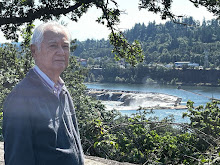
 My Mother Paz Barrido Balleza Katague and me-Photo taken in the mid 1970's. Jaro, Iloilo City, Philippines
 The David Jamili Javellana Katague Family, 1956 Barotac Viejo, Iloilo.


