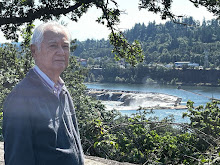
David B. Katague is an online memoirist and cultural essayist whose writing has appeared on HubPages

Saturday, December 31, 2011

Highlights of My Career in Chemistry

My picture used by Stauffer Chemicals in their Advertisement Brochures, 1981

Every workplace is strictly defined by two distinct areas, rank and file on one end and management on the other end. It is a field that can be described in many contrasting ways imaginable. It can be defined as workers versus leaders, hard workers versus hardly working, minimum wage earners versus big earners, powerless versus all power, subordinate versus supervisor, or in a deceitful work condition, slave versus slave driver.

The type of work we choose defines who we are. The more we love what we do, the better we become productive and develop our skills on our chosen field. I have loved science and Math since I was young. I decided to major in Chemistry in college, and with persistence and hard work; I also completed my Masters and Doctorate in the same field.

It was not a surprise that I spent the next four decades working in the field of Chemistry. They were mostly exciting career moves, except for the three layoff experiences. A huge part of my work involved working with various types of people. The success of my former employers was due to the diligence and cooperation among its employees to improve workplace harmony and productivity.

In my more than 40 years of professional career, I have experienced both working rank and file, as well as supervising the work of subordinates. I have worked in four private firms and the Federal Government, the Food and Drug Administration (FDA), where I retired. I enjoyed the challenges and difficulties of both types of job situations. This is the highlights of my work experience story.

My first job after completing my doctorate degree was a Chemist for Chemagro Corporation in Kansas City, Missouri. It was a subsidiary of Bayer Corporation, a German conglomerate. I worked for the analytical chemistry department comprised of about fifty people; half that number was either chemists or biologists. My specific task was to develop analytical methods for the detection of pesticide residues in plant and animal tissues. I worked on my own, similar to six other bench chemists, and we all reported to the same supervisor.

The firm sponsored my visa conversion from a student to a permanent resident, and I was able to legally work and reside in the United States with my family. The company generously took care of its employees. At the end of each successful year, everyone received a 13th month salary bonus. The employees and their families celebrated wonderful annual Christmas parties in a downtown Kansas City hotel, with dancing and free drinks for the whole night.

Inasmuch as I enjoyed and loved working for Chemagro for five years, I found a new job which offered a substantially higher pay. Due to my exemplary work performance, my supervisor preferred and lobbied for me to stay with the company. I had to turn him down because they could not match the package presented by my new employer. It was also a chance for me and my family to move and live in the US west coast, where the mild winter climate is bearable compared to the Midwest.

My next job was at the agricultural research division of Shell Development Company in Modesto, California. I was a Research Chemist, and again I worked individually, same as five other chemists who all reported to a supervisor. My specific duty was similar to my previous job. I worked for them for five years, until the company decided to get out of the pesticide business. They closed their research facility affecting the jobs of more than 200 employees.

My third industrial job was with the agricultural research division of Stauffer chemical company, located in Richmond, California. I was a Senior Research Chemist doing the same project as my two previous jobs. I worked for twelve continuous years for the company, with outstanding annual job performance. I became a Principal Research Chemist, the highest attainable non-supervisory position.

One day in 1986, my supervisor informed me that my job had been eliminated, and I had one day to vacate the facility. It was the most dreadful lay off experience in my life. I felt anger, sadness and humiliation to be dismissed from work with one day notice, after all the years of hard work invested for the company. This was an unforgettable incident and was the gloomiest point in my professional career.
The company terminated sixty research employees, who were upset of the bad news.

One of the chemists was distressed and expressed his outrageous anger by threatening the company and its workers. He told his supervisor of his intention to bomb and burn down the laboratory. He was immediately escorted by the security staff out of the building and into his car. He was informed to leave behind his personal belongings; they will be mailed to his residence. He was warned never to show up again near the company premises or risk getting arrested.

My supervisor was kind and allowed me to take my time to pack up my belongings. It took me two days to clear up my workplace, after toiling for a long period in the same jobsite. We were provided clerical help and office space, in preparation to look for another job, such as updating our resumes, and using the computer and copy machine. We were given six weeks of separation pay plus benefits.

Fortunately, with the help of a friend who is a Church parishioner, I found another job thirty days after leaving Stauffer chemical company. He hired me as a senior research chemist and as a group leader with two technicians to supervise. It was in the same field as my expertise in my previous three jobs spanning the last twenty one years. My new employer was Chevron Chemical Company, and which was located in the same area as my former employer.

This job gave me the introduction and basic knowledge of managing the work of subordinates. I worked for Chevron Company for four and a half years. The company decided to consolidate their research facilities in Texas, and lay off all its research employees. This time I had enough distress and agony from working, and eventually getting laid off from several private companies. To avoid going through any more miserable layoffs, I made a vow that I would never again work for a private company.

In my work experiences, there were noticeable and unavoidable jobsite occurrences. One can never miss the office romantic relationships between co-workers, both illicit and permitted. Though it was frowned upon, there was a boss and staff relationship, which was used as a ploy to get ahead in the company. Some relationships had chemistry, no pun intended, but some never worked out. Oftentimes, there was a sense of distrust among bench chemists for some workers who unjustly obtained preferred work assignments.

Some employees resorted to bribing superiors to get special privileges, such as being able to attend choice conferences and meetings in exciting venues or locations. Likewise, politics was always present at the worksites. It was during an era when various forms of harassment, equal opportunity and discrimination laws were not yet enforced in the workplace. Occasionally, an unexpected chemical explosion happens in a laboratory setting, where luckily no one got seriously hurt.

In the three private companies I worked for, I was able to publish scientific journals for some of the research studies and analytical methods which I developed for the respective companies of Chemagro, Shell Development and Stauffer.

After deciding and making a vow to avoid working in the private sector, I made my new goal which was either to work for the state of California, or the Federal government in Washington, D.C. Four months after I lost my job in Chevron, I was lucky and joyful to be hired by the Food and Drug Administration as a review chemist in the fall of 1990.

In 1994 I was promoted as an Expert Research Chemist with a GS-14 rating. My expertise was on Anti-malarial and Anti-parasitic drug products. In 1997, I was again deservingly promoted to Chemistry team leader, supervising the work of six Chemistry reviewers including five with doctorate degrees.

As team leader, I was responsible for prioritizing, assigning, and assuring the technical accuracy of all chemistry, manufacturing and control issues for all new drug applications submitted to the Division of Anti-Infective Drug Products, Center of New Drugs.

It was part of my responsibility to give advice, instruct and promote high morale and teamwork in my group. My work in the FDA is confidential, until the drug patent on the products I worked on has expired. There are manufacturing supplements that I have approved that are now open for the public in the Internet.

In 1998, I won the Equal Employment Opportunity (EEO) Award. The citation reads, “For outstanding accomplishments in fostering the objectives of the EEO Program by hiring minorities and encouraging their professional growth while providing excellent leadership.” I have received numerous certificates of appreciation, awards in leadership and communications, commendation for teamwork and excellence in the accomplishment of the FDA mission. I have also received several letters of appreciation from private industry for my review work.

There are many good things working as rank and file while enjoying doing one’s job individually. It is a humbling, satisfying and productive experience, if one can work in harmony with one’s immediate supervisor. Working individually develops one’s skills in goal setting and scheduling. But in general, the financial rewards are less than a person who has supervisory responsibilities.

Managing the work of others has its challenges. Moreover, it develops one’s skill in handling and developing people, and the compensation rewards and benefits are better. Due to additional duties, responsibilities and leadership, supervisory work can be more stressful than working as a subordinate. However, supervisory jobs give one more personal growth and satisfaction, based on my personal experience. My work in FDA as a team leader managing the work of six scientists had been the happiest and rewarding work experience in my career in Chemistry.

Friday, December 30, 2011

Prejudice and Discrimination Against Filipinos


The prejudice against Filipino immigrants in the US and specially in California in the 1920s to 1940s is well documented(1,2). One of the well known books, America is in the Heart, documenting the life of the Filipino immigrants at that time period was written by Carlos Bulosan. Mr Bulosan is my number one literary heroes of that time.

Like many Filipinos during that time, Bulosan left for America on July, 1930 at age 17, in the hope of finding salvation from the economic depression of his home. He never again saw his Philippine homeland. No sooner had he arrived in Seattle, was he immediately met with the hostility of racism, forcing him to work in low paying jobs.

He worked as a farm worker, harvesting grapes, asparagus and other kinds of hard labor work in the fields of California. He also worked as a dishwasher with his brother, Lorenzo in the famous Madonna Inn in San Luis Obispo. He was active in labor politics along the Pacific coast of the United States and edited the 1952 Yearbook for ILWU Local 37, a predominantly Filipino American cannery union based in Seattle.

Mr Bulosan died in 1956. To honor his memory, a Bulusan Memorial Exhibit located in Seattle's International District and in the Eastern Hotel features his literary works and manuscripts. One of his famous books, America is in the Heart based on his autobiography is now made into a Philippine movie.

One of the famous quote from that book is timeless, as follows: "We in America understand the many imperfections of democracy and the malignant disease corroding its very heart. We must be united in the effort to make an America in which our people can find happiness. It is a great wrong that anyone in America, whether he be brown or white, should be illiterate or hungry or miserable."

Discrimination against the Filipinos was very blatant during the time of the Manongs and Carlos Bulosan. It appeared that by the 1960's, racial discrimination has disappeared from the minds of the American people. But in 1965, my wife and three children experienced their first discrimination experience in Gladstone, Missouri.
Gladstone is a northern suburb of Kansas City, Missouri with about 99.5% Caucasian population at that time.

The discrimination was not blatant but very subtle. After relocating in Missouri for my first job after my Ph.D graduation from the University of Illinois, my family and I joined a Country Swim Club just a couple of blocks and a walking distance from our rented residence.

Macrine and the kids would swim at the country club twice or three times a week. The first day, they were there, she overheard the conversation from two middle-aged ladies. She heard a comment of the first lady to her friend, "look we are getting invaded by blacks already". Macrine look around, but there were no black families around; she and the kids were the only colored ( brown) relaxing and swimming in the pool area. Macrine was not bothered and did not get upset. She continued watching the kids swimming in the pool. Suffice to say, I had never experienced personally, an incident of prejudice or a discriminatory remark in my more than 51 years residing and working here in the US(California, Illinois, Missouri and Maryland).

After our second year in the neighborhood, we became more active socially and became well-known to the Gladstone community. I was elected by the members of the club as treasurer for two years. I was handling the payroll of three employees and collecting the membership fees of the 300 members. I was delighted that the club members and Board of Directors trusted me with their finances. I therefore conclude that the cure for discrimination is education and ignorance is the mother of prejudice.

If you are a Filipino-American or a member of a minority and is reading this article, have you ever experienced prejudice or discrimination in your life here in the US? Discrimination may be racial, religious, sexual, financial or your educational status.

Here's a trailer of an award winning documentary on the Filipino farm workers of Delano, California.


(1) Carlos Bulosan, America Is in the Heart, 1946
(2) The Delano Manongs:Forgotten Heroes of the United Farm Workers-a Video by mediafactory.tv/2008/01

Thursday, December 29, 2011

Cloyne Court- Excerpts 34 and 35

Photo from ahoy.tk.jk.net
Cloyne Court, Episode 34
By Dodie Katague
Wednesday, February 24, 2010
Rated "R" by the Author.
The author lived at Cloyne Court from 1977-79, while attending the University of California, Berkeley.

The waiting line at the financial aid office snaked down the corridor and into the main lobby of Sproul Hall and moved at the celerity of a banana slug on Thorazine. Most students sat on the cold floor against a marbled wall, shifting one body place every five minutes. At that rate, it would be close to an hour before I'd get to the service window.

While waiting to pick up my scholarship check and work-study grant, I did what every conscientious college student does. I did my homework. I pulled out my copy of Virginia Woolf and tried to read while surreptitiously watching the cute women walking by.

After forty minutes, I was optimistic. I had moved close enough to the front of the line to hear the applicants and financial-aid clerk's conversations.

No matter what the applicant's problem was, the answer was still the same. "Fill out this form," the clerk said. "Sign the three places marked with an X and go to Window C with your driver's license and student ID."

"But this stipend check was sent to me in error," said the student. "It's made payable to someone else. I want to return it and get the check that was supposed to be mine."

"No problem," said the clerk. "That happens all the time. Your check was probably sent to this person's address. I hope that she'll catch the error and turn in the check. In the meantime, you'll need to fill out this form, sign an affidavit swearing you didn't get your check, and go to windows C to look up your records, then window D to return the erroneously issued check and window E, with proof from window C and D, to get your check reissued. Once you submit all that, you have to wait two weeks until we send you a letter that your check is ready to pick up at window B. Understand?" The student took the paperwork and left. Everyone in line moved up one-body space.

I heard shouting and chanting coming from outside the building. "HEY, HEY, HO, HO. UC HAS GOT TO GO. OUT OF SOUTH AFRICA NOW."

The chanting became louder before I noticed that the antiapartheid protesters had rushed into the building and filled the entire first-floor hallway. Then, as if on cue, they sat and blocked the entrances and the main hallway. Many protesters were students, but most looked like street vagabonds with their unwashed scraggly hair, filthy T-shirts, torn blue jeans with kneeholes and dirty bare feet.

"THERE CAN BE NO BUSINESS AS USUAL UNTIL UC DIVESTS ITSELF FROM CORPORATIONS THAT DO BUSINESS IN SOUTH AFRICA." A speaker, dressed in the black and red colors of the Revolutionary Student Brigade, shouted through a bullhorn. "WORKERS AND STUDENTS UNITE. JOIN US IN OUR SIT-IN OF SPROUL HALL."

I looked at the other students in line with me. I didn't know any of them, but we had spent the last forty minutes together. I had more of a relationship with them than the protesters, who had mobbed Sproul Hall.

What were the people before me going to do? Were they going to abandon their position and leave? If I left now and the financial-aid office stayed open for business, I would have wasted the morning for nothing and have to wait again later. If any students in front of me left and I stayed, I’d be closer to the front.

The financial aid office remained open. Even with the protesters seated in the main hallway, making it difficult to go anywhere, the university was still in business.

"The only people these protesters are hurting is me," said the guy before me. "They should be protesting outside Standard Oil or the Bank of America, not the financial aid office."

Cloyne Court, Episode 35
By Dodie Katague
Wednesday, March 03, 2010
Rated "R" by the Author.

The author lived at Cloyne Court from 1977-79, while attending the University of California, Berkeley.

I nodded. Protest tactics like sit-ins and blocking traffic only inconvenienced the average citizen.

For another twenty minutes, the protesters sat and chanted antiapartheid slogans. I reached the financial aid window and set my book bag down to retrieve my financial aid documents when the clerk said, "We just received word to evacuate. The riot police are coming. You better leave too." She shut the window.

I hit the glass with my fist. Fuck humanitarian principles! These damn protesters didn’t have international solutions to a better world. They only created microproblems, none of which would end apartheid or free Nelson Mandela.

Jail was the last thing I needed. I had to get out of there. I didn't want my head bashed by a police baton. It was this defining moment in my emerging political awareness when I concluded a person's right to protest peacefully ended when it started impinging on my right to collect a financial-aid check.

A new metallic voice bellowed from a bullhorn. "THIS IS THE POLICE. YOU HAVE FIVE MINUTES TO LEAVE THE BUILDING, OR YOU WILL BE ARRESTED FOR TRESPASSING."

The mention of arrest unsettled the students whose resolve for social justice was less than their desire for something exciting to do. Several tried to head for the exit, but protesters, determined to be arrested, blocked the doors. Nobody could leave.

Another student, dressed in black and red, spoke to the seated crowd. "Don’t abandon the cause now. When they arrest you, go limp. Make them carry you out."

A student with a bullhorn wearing a shirt with "Legal Observer" printed on it told the crowd what would happen. "The police will inform you that you are under arrest."

The crowd groaned.

The legal observer said, "They will ask you to stand and walk out with them. If you do, you will be issued a citation and let go."

The crowd cheered.

"If you go passive and limp, several cops will lift you and carry you out."

The crowd booed.

"If you are too heavy to be lifted," the legal observer pointed at some fat people, "the police will roll your limp body onto a net, wrap the net around you and drag you out."

The crowd laughed at the thought of the fat people being dragged out.

"If you choose passive resistance, you will be arrested, booked at the jail and released on your own recognizance. If you actively or violently resist, you will be pepper sprayed and charged with felony resisting." The crowd booed again.

"Resist!" A protester yelled. "Become martyrs for the cause!"

The legal observer said, "A felony arrest means you will have to post a high bail, and if you can't afford to pay, you will remain in jail until your court arraignment in forty-eight hours."

The crowd buzzed at the financial implications. Free speech wasn't exactly free if you had to pay a bail bondsman to stay free. The protesters talked among themselves, each trying to determine the best action to take.

A protest organizer in his black and red uniform encouraged the crowd. "We need consensus, people. Only through strength in numbers can we win this battle." However, consensus went only so far.

I saw the back of a woman in black and red carrying a protest sign. She was talking to each seated student and taking a tally of what his or her arrest action would be. She wrote this information on the back of her protest sign. She turned to me. "Derek? What a surprise! I didn't see you as a protester type of guy."

It was Diane, Ms. Revolutionary Student Brigade. The young woman I had met at Sather Gate handing out flyers.

"I'm not," I said. "I was here to pick up my financial aid check."

"Derek, when are you going to stop being a money grubbing whore for the establishment?" she said.

I was still incensed at my predicament. I was trapped because of her. "Don’t point fingers until you stop taking money from your rich daddy!"

She was taken aback, "Gee, I didn't know you'd be so sensitive about taking the Man's blood money."

I looked at her eyes when she apologized. She seemed sincere. She was cute, but this was no time for flirting.

"What's it going to be?" she asked. "Stand and walk, go limp or actively resist?

"Why are you taking a tally?" I asked, thinking, shouldn't one's defiance to authority be a private personal decision?

Wednesday, December 28, 2011

The Best Smell I have Experienced in my Life


Photo of the Ylang-Ylang flower in my backyard, Chateau Du Mer, Marinduque, Philippines

This article was inspired by ViewsHound Question on its Wall in Facebook-regarding the best smell one has experienced. Mine is the smell of the blooming Ylang-Ylang trees in my garden at Chateau Du Mer, Boac, Marinduque, Philippines. I have two big mature trees in the backyard of Chateau Du Mer that are about 15 years old.

When the trees are in bloom, you can smell the fragrance of it flowers to as far as 50 meters and even farther if the wind direction is favorable. It is one fragrance, that I will never forget at Chateau Du Mer in Marinduque. Its reminds me of the perfume, Channel No.5.

The fragrance of ylang-ylang is rich and deep with notes of rubber and custard, and bright with hints of jasmine and neroli. The essential oil of the flower is obtained through steam distillation of the flowers and separated into different grades (extra; 1; 2; 3) according to when the distillates are obtained. The main aromatic components of ylang-ylang oil are benzyl acetate, linalool, p-cresyl methyl ether, and methyl benzoate, responsible for its characteristic odor.

On the subject of Ylang Ylang Oil,I am proud to inform readers of this blog that my Master’s degree thesis was the Analysis of the Volatile Constituents of Ylang Ylang Oil by Gas Chromatography. This was published in the Journal of Pharmaceutical Chemistry, Vol.52, No.3 252-258 dated March, 1963.

I believe not too many non-Filipinos have heard of this tree and it fragrant flowers. Here’s a short information from Wikipedia for your reading pleasure.

Cananga odorata, commonly called Ylang-ylang (pronounced /ˈiːlæŋ ˈiːlæŋ/, EE-lang-EE-lang), cananga tree, ilang-ilang, kenanga (Indonesian), fragrant cananga, Macassar-oil plant or perfume tree), is a tree valued for its perfume. The essential oil derived from the flowers is used in aromatherapy and in the manufacture of perfumes.

Cananga odorata is a fast-growing tree of the custard-apple family, Annonaceae, that exceeds 5 m (15 ft) per year and attains an average height of 12 m (40 ft). It grows in full or partial sun, and prefers the acidic soils of its native rain forest habitat. The evergreen leaves are smooth and glossy, oval, pointed, with wavy margins, and 13–20 cm (5–8 in) long. The flower is drooping, long-stalked, with six narrow greenish yellow (rarely pink) petals, rather like a sea star in appearance, and yields a highly fragrant essential oil.

The Chemical Composition Typical chemical compositions of the various grades of Ylang ylang are reported as follows:

Constituents Linalool, geranyl acetate, caryophyllene, p-cresyl, methyl ether, methyl benzoate, other, sesquiterpenes.

Etymology

The name ylang-ylang is derived from Tagalog, either from the word ilang, meaning “wilderness”, alluding to its natural habitat, or the word ilang-ilan, meaning “rare”, suggestive of its exceptionally delicate scent. A more widely accepted translation is “flower of flowers”. The plant is native to the Philippines and Indonesia and is commonly grown in Polynesia, Melanesia and Micronesia.

The essential oil of ylang-ylang is used in aromatherapy. It is believed to relieve high blood pressure, normalize sebum secretion for skin problems, and is considered to be an aphrodisiac. According to Margaret Mead, it was used as such by South Pacific natives such as the Solomons where she did much of her research. The oil from ylang-ylang is widely used in perfumery for oriental or floral themed perfumes (like Chanel No. 5). Ylang-ylang blends well with most floral, fruit and wood smells.

In Indonesia, ylang-ylang flowers are spread on the bed of newlywed couples. In the Philippines, its flowers, together with the flowers of the sampaguita, are strung into a necklace (lei) and worn by women and used to adorn religious images.

Medicinal uses

Ylang Ylang is a common ingredient in the herbal motion sickness remedy, MotionEaze.

Circulatory System: Ylang ylang is recommended for treating palpitations and reducing high blood pressure

Nervous System : Ylang ylang is known for its ability to slow down over-rapid breathing and over-rapid heart beat. These symptoms are usually associated with shock, anxiety and anger.

Reproductive System: Ylang ylang has proven beneficial for treating PMS, especially associated with extreme mood swings that occurs just before the onset of menstruation. For this purpose, Fischer-Rizzi recommends blending Ylang ylang with clary sage and neroli. This blend should be used in a bath, massage oil or in a vaporizer.

Skin care: Added to the skin care preparation, Ylang ylang oil is beneficial in softening and balancing the moisture of the skin. It is recommended in hair care to treat split ends. It can be used in a shampoo base of massaged into the tips of the hair after shampooing with a base oil such as apricot kernel or jojoba oil. Ylang ylang is recommended for dry and oily skin and is reputed to have a balancing action on sebum production.

I hope you find this article informative. It is the best smell, I have ever experience in my life.

Tuesday, December 27, 2011

Christmas Party, 2011


My four beautiful granddaughters, Carenna, Marina, Elaine and Alix
Dave and Macrine with the six grandchildren
This year, 2011 Macrine and I delayed our snowbirding trip to Marinduque for next month, so we could spend the Christmas Holidays with the Kids and grand children. We celebrated Christmas with a late lunch on December 24th to give the children also time to spend the holidays with their in-laws and other relatives.

Dodie and his family went to San Diego, CA the next day to spend the Christmas with Ruth's family. Ditas, Nick and Carenna went to Lincoln, CA in the evening of the 24th to share Christmas with Nick's family. Dinah with Ian and Elaine went to Mountain View after the party in our house to spend Christmas with Macrine's sisters ( Pepot and Jean) and her nieces, Elaine Lazarte Chalfin and Ella Lazarte.

As per request by the kids, Macrine prepared her favorite dishes-chicken-macaroni salad, beef broccoli in oysters sauce with mushrooms, pancit, puto and dinugu-an. In addition we have honey-baked ham that I ordered last week, cake and coffee for dessert. I have to wait in line to pick up my pre-ordered honey baked ham for about one hour in the cold, but the ham was worth the wait. Above are some of the photos taken during our Christmas reunion. All the David Balleza Katague clan were present

LinkWithin

Related Posts Plugin for WordPress, Blogger...