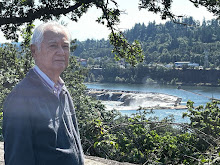
David B. Katague is an online memoirist and cultural essayist whose writing has appeared on HubPages

Tuesday, April 17, 2012

Enjoying a Snowbird Lifestyle in the Philippines

Marinduque-my Island Paradise

The following article was written by Celina Macaisa and posted by www.myphilippineretirement.com dated January 2, 2010. It was titled Retiring Half-a-Year in the US and the Philippines.

"When a Global Filipino Retires, which country does he choose for the next part of his life? Will he need to leave home, friends, and family (a second time)?

For decades, due to lack of well-paying jobs in the Philippines, Filipinos have been leaving their country and families behind to improve their own and their families’ standard of living.

And after decades of working hard in a highly-competitive, fast-paced business environment, and ‘you are on your own culture’ of a 1st world country; these (former) Filipinos are now prioritizing how to increase the quality of their retirement years.

Ironically, the Philippines which may not have been a great country to make a living in during their younger years is an excellent country for retirement: warm climate and culture, relaxed pace of life, and lower living expenses.

Hence, the ‘snowbird lifestyle’ of having two residences in different parts of the world, which has been practiced by Europeans and North Americans for centuries, is now gaining more acceptance by Filipinos who immigrated abroad.

The Rise of the Filipino Snowbird

“I know of another person who is doing the same lifestyle we have, 6 months in PI [Philippine Islands] and 6 months in the US. We call ourselves snow birds. A lot of our friends are envious of us.” - David B. Katague

However, although many Filipinos living abroad are aware of the ‘snowbird’ retirement lifestyle, many are not quite sure about the planning and costs needed to make it work.

Hence, this article is written to give a look on how one Filipino couple, David and Macrine Katague was able to put into reality their wish to live their retirement years both in the U.S. and the Philippines—-two countries they think of as home and where key family members live.

David B. Katague is a retired Chemistry Team Leader of the Food and Drug Administration in Silver Spring, Maryland USA. He is also currently a proprietor of Chateau Du Mer Beach Resort, in Boac, Marinduque, Philippines.And one of the most interesting things you will learn from this interview is that beyond harsh winters and cost, ‘family’ is the driving reason and support factor for making this retirement lifestyle work".

Here is our interview with David B. Katague:

1) How many years have you spent in the US?
“[We] have lived in US since 1960 to the present.”

2) What were your top reasons for choosing your retirement lifestyle of living half-a year in the Philippines and half-a-year in the States?

“[Our reasons were] climate (even though the winters of Northern California are much milder than that of Chicago or Toronto), relatives, and cheaper standard of living.”

3) Before making this decision, did you know of another former Filipino retiree who practiced this ‘snowbird lifestyle’ that influenced you?
“[Yes], my sister-in-law”

4) Did you re-acquire your Filipino citizenship or retired in the Philippines under the Special Resident’s Retirement Visa (SRRV)?

“My wife reacquired her Filipino citizenship 2 yrs ago. I will consider applying for dual citizenship if I decide to live in Philippines permanently.”

5) How do you spend your time here in the Philippines? What makes retiring in the Philippines interesting and inspiring in terms of activities, new experiences, and living with other Filipinos?

”Setting up a small business (a beach resort and conference center (www.chateaudumer.com), keeps me busy while I am in Marinduque.

In addition since my favorite hobby is gardening, the tropical climate is conducive to growing orchids, fruits, and vegetables and other tropical ornamentals. This gives me plenty of exercise both physical and mental, an antidote to developing AZ disease.”

Also the presence of relatives makes life masaya lalo na [happy especially] during the Christmas and Easter Season. I do miss my grandchildren during Christmas while we are in PI [Philippine Islands].”

6) Practical concerns on this retirement lifestyle:
a) Are you receiving pension? How is this retirement way of life feasible?

“I have SS, private and federal pension. Since I am maintaining 2 households, it is a very expensive proposition. Luckily, I have a son, who takes care of our house here in NC [Northern California] while we are in PI.

When we are in US, I have a full time caretaker who takes care of the house and the beach resort.”

b) In articles discussing retiring in the Philippines, an allowance of US$1,000 to $1,500 a month is often quoted as enough for a retiring couple to live on. Is this still true in your experience?
“Yes, $1500 a month is still adequate in the provinces. In Manila, this amount will be probably too tight.”

c) Did you need to have a trial-run first? Or did you stay in the Phil with a tourist visa first before making the final decision?

“[No.] I know life in PI as I grew up there until I was 21 years old. The only question is where in the Philippines, we should retire, my home province or my wife's home province. Marinduque was the winner.”

7) Medical Insurance and Healthcare: In living half-a-year in the Philippines, what plans did you make for medical emergencies since U.S. Medicare/Medicaid does not cover for treatment in the Philippines?

“I have Blue Cross under the Federal Insurance Plan. My wife has Phil Health. I recommend a minimum of $2000 for medical emergency.”

8) Are there any individuals and organizations who were a big help to you in setting-up your retirement life in the Philippines? What do you think the government can improve on to attract more former Filipino retirees?
“Yes, my sister-in law helped us built our retirement home, while we were still working here in US.”

“To encourage Filipinos expatriate, the government should help in relocation by exempting them of taxes for their household goods and car. Also, there should be someone in the Philippines to help them settle and facilitate their move.”

Note: Currently, one-time tax exemptions for importing personal goods (except for cars) to the Philippine is only provided to former Filipino retirees who applied for the Special Resident Retirees Visa (SRRV), within 90 days of SRRV issuance and not exceeding $7,000. These tax exemptions are not accorded to former Filipinos who are retiring in the Philippines through re-acquisition of Filipino citizenship. - myphilippineretirement.com

9) Advice on doing it right:

a) Any suggestion/advice for other Former Filipinos who are still evaluating their decision in living part of their retirement life in the Philippines?
“Always plan ahead. Choose a location, where you have relatives and friends [emphasis mine]. Get health insurance accepted in PI, but reserve cash for medical emergency.”
b) Last question: Are there some common pitfalls to avoid?

“Do not engage in business if you can not personally manage it or have a trusted relative or employee to do it.

Keep your mouth shut in local politics. [Get] acculturated again to the Filipino lifestyle of [being] easy going, no value of time [or different regard for time as compared to N. America] to avoid the rat race again, thus preventing a heart stroke.

Keep always busy both in mind and body, thus enjoying your retirement, and hopefully a long life.”

To summarize this interview, a global Filipino can enjoy his retirement years both in his country of birth and new home country through adequate financial preparation and family support.Why make a tough choice of permanently leaving your new home, new friends, and family in North America; or forego the warmth of the climate and culture of your country of birth when you can be a Filipino snowbird?

Sunday, April 15, 2012

Joys and Pains of Managing a Small Beach Resort

Chateau Du Mer Beach House, Boac, Marinduque, Philippines

If you have been reading my blogs and Face Book notes and status, you probably know, that my wife and I owned and managed a small beach resort in Boac, Marinduque, Philippines. We named it Chateau Du Mer. It is a French name, loosely translated as House by the Sea or House of the Sea.

Grammatically, it should be Chateau De La Mer, since Chateau is a feminine noun, but for brevity, we used “Du” ( masculine form) instead of “De La”. Currently the resort could accommodate up to 15 guests. Most of our clients are non-Filipinos. Because of the name of the resort, majority of our guests were from France for the last 5 years. On Easter Week, the resort becomes a BED and BREAKFAST INN.

The resort is composed of a two-story beach house, a servant/care-taker cottage, a2600 sq ft 3-bedroom French Provincial house ( our retirement home), a conference Hall that could accommodate up to 400 attendees and four small buildings housing our diesel generator, tools and equipments and two water pump houses. My two sister-in-laws have also a vacation cottage, a beach house and a servant quarters with its own water well and pump house in the five acres of landscaped and fenced property. For a detail description of the beach resort, visit http://chateaudumer.blogspot.com or www.chateaudumer.com

Sunset from the Balcony of the Beach House-Photo by Philippe Godard

This year Holy Week Season and Moriones Festival was our busiest week. The beach house was fully booked. We had 12 guests from Denmark, France, Australia and Singapore. Reservations and deposits had been negotiated via e-mail and electronic banking about four months before Holy Week. However, I am glad to know that one month before Easter, I received numerous telephone and e-mail inquiries( almost daily) asking for availability and possible booking. This means that my Internet presence is good and my advertising is working. I wish I had more cottages to accommodate guests that do not plan ahead. Maybe next year, if I win the LOTTO, I will build more cottages. So what are the joys of running a small resort with mostly non-Filipino clients.

1. Meeting people of varying ages of different background and culture is very educational and inspiring.

2. Helping them with their transportation and other needs gives me things to do,so it makes me feel useful

3. Hearing positive feed backs about their vacation, amenities of the resort ( continental breakfast, hot showers, air-conditioning) as well as their enjoyment of the beauty of the island made me very proud that I have provided excellent service to our guests.

4. After a few days of stay at the resort, these guests became personal friends. Some of them plan to return, but all of them informed me they will recommend the resort to their friends and relatives.

5. Last but not least, the rental income helped me pay my annual real estate taxes and maintenance costs.

Now for the pains of managing the resort

1. Maintenance costs had been escalating. Recruiting trusted and capable workers, painters, plumbers, cook, housekeeper is getting harder in Boac.

2. Getting personal help( except for gardeners) had been my problem this year, so I have to do most of the driving and menial chores such as opening and closing the lights, etc...

3. Preparing and purchasing food for breakfast ( no rice and dried fish in the morning) for the enjoyment of non-Filipino guests required advance planning and skill. Luckily my wife had been excellent in this department based on positive comments about the breakfast we served.( mango pancakes, french toast, huevos rancherous are our guest's favorites)

4. Dealing with various personalities, different cultures and backgrounds is not easy and coping up with very demanding guests sometimes irritates me.

However, in general, the joys outweighs the pains. So as long as my good health continues, I will gladly do this annual activity. Who says that after retirement, you just sit on your butt and do nothing and feel sorry for yourself. Managing a small beach resort makes me feel young and useful. This is one activity that I enjoyed very much in my retiring years including conducting, managing and participating in several medical and dental missions in the province of Marinduque for the last ten years.

Saturday, April 14, 2012

Ten Things to Do during your visit to Marinduque


There are numerous things to do in Marinduque during your vacation. But the following ten items are my recommendations:
1.Beach combing, snorkeling, bathing , scuba diving and sunset watching
This photo was taken at the balcony of the Beach House. Note that low tide is starting and the corals are starting to stick out also.


2.Caves Exploration-Spelunking. There are two caves worthy of exploration-Bathala in Santa Cruz and Tarug in Mogpog. The Bathala Cave consist of eight other caves. One of the caves has a resident python. Photo by Flickr.com

Resident Python-photo by 4.bp.blogspot.com
3.Island Hopping- The Tres Reyes Islands Marine Sanctuary, Polo and Maniwaya Islands.
This is Maniwaya island being develop as an alternative to Boracay, photo by panoramnio.com

4.Shopping for Morion masks and native handicrafts- nito products, wood carvings and potteries. This is a nito handbag, a popular gift item. Photo by handicrafts.org

5.Trip Around the Island-Sulfur and Hot Springs, Poctoy White Beach and Mt Malindig
This is Poctoy White Beach with Mt Malindig in the background in Torrijos, the most popular beach in the province.

6.Partaking and Enjoying the island delicacies- Ginatan na Manok sa Gata, bibingka, kare-kare and ulang-ulang soup. Photo of bibingka by wikimedia.org, yum, yum, it is delicious.

7.Join or just watch the Moriones Festival during Holy Week. Women Moriones Participants-photo by etravelpilipinas.com

8.Visit 400 year-old churches, ( Boac, Gasan and Santa Cruz )and antique homes in downtown Boac. This is one of the many antique houses in downtown Boac. This one is owned by my sister-in-law, Mrs Siony Jambalos. It is located just across the Boac Hotel.
The Green Mansion photo by Dong Ho
9.Watch colorful butterflies (in the butterfly farms) or native birds ( bird watching) in the foothills of Mt. Malindig. This is a monarch butterfly. Photo by howdididoit.com


10.Treat yourself to the most expensive and luxurious resort in Southern Luzon- The Bellarocca Resort and Spa in Buenavista or pamper yourself to an affordable private beach resort at Chateau Du Mer in Boac. The Beach House and Bridge at twilight.

For details visit the following websites: www.chateaudumer.com or http://marinduquemyislandparadise.blogspot.com

Thursday, April 12, 2012

Ancient Artifacts and History of Marinduque


Marinduque Residents and Soldiers during the Philippine-American War, 1900


Battle of Manila- The Philippine-American War :1899-1902

The following is an excerpt of the early history of Marinduque up to 1945 from Wikipedia: For additional details visit the website: www.ulongbeach.com
Legend has it that the island of Marinduque was formed as a consequence of a tragic love affair between two people: Marina and Garduke. Marina's father, a local chieftain, did not approve of this affair and ordered the beheading of Garduke. Before this could be done, the couple sailed out to sea and drowned themselves, forming the island now called Marinduque. Other versions of the legend also claim that the island was named "Malindik", named after Marinduque's highest mountain, Mt. Malindig. When Spanish conquistadors arrived in the Philippines, they found the name hard to pronounce, which led to the renaming of the island as "Marinduc" and later the current "Marinduque" when spelled in its French from (e.g. Antique for Hantik, Cavite for Kawit).

During the Spanish and early American occupations, Marinduque was part of the province of Balayan (now Batangas) in the 16th century, Mindoro in the 17th century, and had a brief period as an independent province in 1901, when the Americans arrived.

During the Philippine-American War, Marinduque was the first island to have American concentration camps.[2] Marinduque is the site of the Battle of Pulang Lupa, where Filipino soldiers under Colonel Maximo Abad, defeated a larger better trained force of Americans.

In 1902, the US-Philippine Commission annexed the islands of Mindoro (now two separate provinces) and Lubang (now part of Occidental Mindoro) to the province.

Four months later, the province became part of the province of Tayabas (now Quezon).

On February 21, 1920, Act 2280 was passed by the Philippine Congress, reestablishing Marinduque as a separate province.

In 1942, the Japanese Imperial forces landed in Marinduque.

In 1945, landed from the American and Philippine Commonwealth troops attacked from the Japanese Troops liberated to the Battle of Marinduque in the Second World War.

If you like antiquities and archeology you will enjoy this video on ancient artifacts found in Marinduque from marinduquegov.blogspot.com

Wednesday, April 4, 2012

Moriones Festival, 2012

Photo by Toby Jamilla

This year Holy Week Festival is better than last year. There is only one Battle of the Moriones pageant that will be in Santa Cruz this afternoon. Last year there were two Battle of the Moriones shows, one in Boac and one in Santa Cruz sponsored by two political rivals. This year it appears that politics is now set aside just for this week. Because the Beach House is full I did not have the time to take pictures of the parade and religious procession. However based on the program schedule, this year celebration is about the same as last year with the exception of more foreign tourists. All the hotels and resorts are fully booked and the restaurants are busy. Thanks to the festival, the hotel and resort owners, food and transportation services are busy, hopefully earned enough to pay for taxes and expenses for the whole year. Below is an article I posted in my blog in 2008.


There are several excellent articles in the web discussing the Moriones Festival. This one is a brief summary of the festival written by Zenaida Serrano of Buenavista.

At the end of this article, I will list two photo blogs worth reading. Incidentally, these two blogs are in the top ten blog sites in the Philippines on my reading list.

Moriones Festival, Marinduque, Philippines

One of the most colorful festivals celebrated in the island of Marinduque is the Moriones Festival. Morion means "mask" or "visor," a part of the medieval Roman armor which covers the face. Moriones, on the other hand, refers to the masked and costumed penitents who march around the town for seven days searching for Longinus. This week-long celebration starts on Holy Monday and culminates on Easter Sunday when the story of Longinus is reenacted in pantomime. This is a folk-religious festival that re-enacts the story of Longinus, a Roman centurion who was blind in one eye.

Longinus Legend has it that Longinus pierced the side of the crucified Christ. The blood that spurted forth touched his blind eye and fully restored his sight. This miracle converted Longinus to Christianity and earned the ire of his fellow centurions. The re-enactment reaches its climax when Longinus is caught and beheaded.

The festival is characterized by colorful Roman costumes, painted masks and helmets, and brightly-colored tunics. The towns of Boac, Gasan, Santa Cruz, Buenavista and Mogpog in the island of Marinduque become one gigantic stage.

The observances form part of the Lenten celebrations of Marinduque. The various towns also hold the unique tradition of the Pabasa or the recitation of Christ's passion in verse. The Via Crucis is also reenacted and flagellants, known as Antipos, inflict suffering upon themselves as a form of atonement. After three o'clock on Good Friday afternoon, the Santo Sepulcro is observed, whereby old women exchange verses based on the Bible as they stand in wake of the dead Christ. Did you know that Morion means mask, which is part of the medieval Roman centurion’s helmet. Moriones are the masked penitents who take part in the reenactment of the legend of Longinus, and Passion of the Christ.
Comment: This pageantry and religious revelry on Easter Week is a must for tourist to see and participate. The whole week of celebration is climaxed with "Street Dancing" (like the New Orleans, Mardi Gras) in Gasan and a colorful Easter Parade in Boac.

I hope you find this video and short summary of the Moriones Festival and Holy Week Celebration informative.

Favorite Blog Sites on Moriones Festival

1. dennisvillegas.blogspot.com/april/2008
2. http://my_sarisari_store.type/moriones festival

LinkWithin

Related Posts Plugin for WordPress, Blogger...